
Pets speak with their whole bodies. Do you know these common cues that pets use to express what they’re feeling?
Dogs
- A wagging tail or one that’s in line with their spine and ears up in their natural position usually signals that a dog is confident and happy.
- So does a “smiling” face with an open or relaxed mouth. Licking lips, nipping or showing their teeth can be a sign of anxiety or stress.
- Relaxed dogs usually stand with their weight evenly distributed and their body loose and not tense. Keeping the tail low or between their legs can signal fear or discomfort.
- A “play bow,” which looks like the downward dog yoga position with front legs down and tail end up in the air, usually means a dog wants to play.
- Eyes wide or blinking rapidly, looking at you from the side, or putting their ears back or flat on their head are signs a dog may be getting anxious or uncomfortable.
- So are fidgeting, shaking or shivering when not cold, crouching, barking or growling.
- Spinning around in circles, barking rapidly or excessively, and holding their tail and/or ears up in an alert position are signs a dog may be getting over-excited.
- When a dog needs to go out for a bathroom break, they may sniff around as if looking for something, pace back and forth to the door, stand in front of the door or paw at it.
Cats
- Bringing cats to public spaces has grown in popularity, but some cat experts believe that this creates stress. It’s important that pet parents know their cats well and look for cues in their behavior to make sure they feel comfortable and safe.
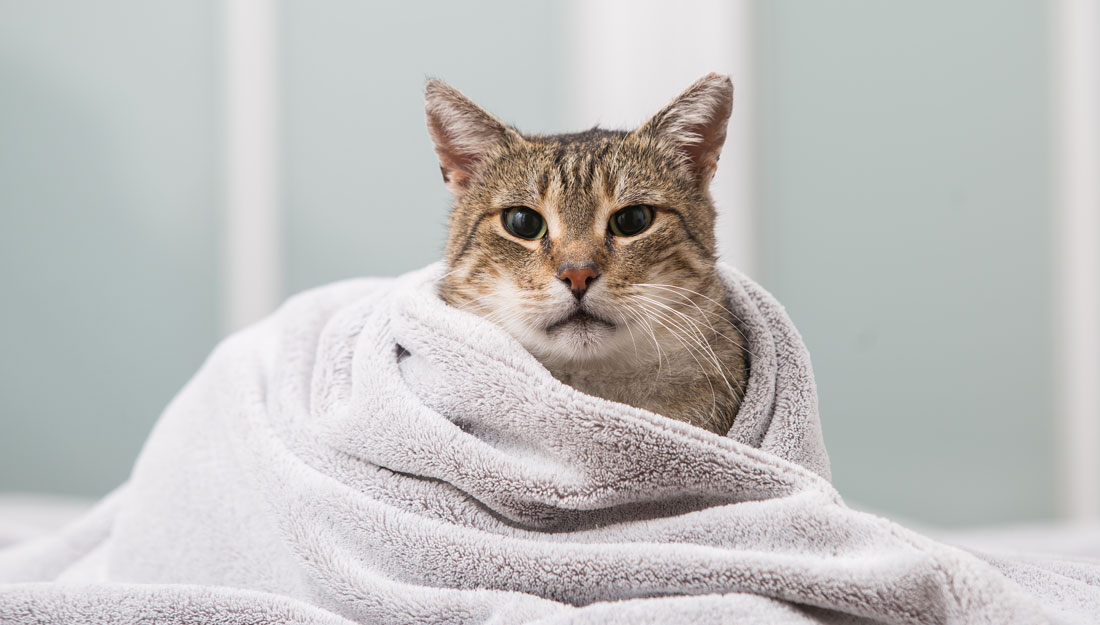
- A cat that is stretched out, sitting with their feet tucked in beneath them, or lying on their back is usually relaxed.
- Blinking slowly is also typically a sign of being comfortable, as is facing you head on, which usually means they feel safe with you.
- Turning their ears backward, sideways or flat (like helicopter or airplane wings) is a sign a cat may be uncomfortable or afraid.
- So is a twitching tail or one that’s flicking back and forth, especially with the fur standing up. Bristled fur on their back is also a sign cats feel threatened.
- Hunching close to the ground or cringing, with a tucked tail or a tail thumping on the ground, are also signs of discomfort or aggression.
- Cats purr both to signal that they’re happy and to comfort themselves when stressed. If your cat semes to be purring at odd times, you’ll want to talk with your vet.
- Yowling or howling may signal that a cat is in some other kind of distress, for example afraid or in pain.
If you have questions about your pet’s behavior, it’s a good idea to talk with your vet.
As a pet parent, you probably know how to diffuse most issues in the moment – for example by giving your pet space, playing with them or calming them with a petting or grooming session.
But to address enduring behavioral issues, you’ll want to talk with an expert to understand potential underlying causes and get tips on how to address them.


 Your Privacy Choices
 English
  French